0
17 Sep 2026

Kids Afraid to Try

Your child is not going to excel at everything – and that’s okay.

Kids can think they need to be good at something before they’re willing to try. If they can’t be sure they’ll succeed, they may decide it’s better not to try at all.

I was reminded of this when my son had the opportunity to do track. He didn’t really want to do it. When I asked why, he told me he didn’t think he would be good at it  He was worried that if he didn’t do well, people would think less of him or make fun of him

He hadn’t even started, and he was already worried about the outcome.

This is where emotional resilience comes in. He could feel like he wasn’t going to be good at it. He could feel worried and nervous about what people might think. He could feel uncomfortable not knowing how it would turn out. None of those feelings meant he couldn’t still choose to try.

Kids afraid to try may be worried about failing, being judged or not being good enough. What matters is helping your kids understand that difficult emotions don’t have to decide what they do next.

This is what I know: Your kids don’t have to be the best. They may feel nervous that they won’t succeed. However, they can still focus on learning, trying and giving their best effort instead of worrying about getting it perfect.

Until next time…

3 Sep 2026

Before You Say “Don’t Worry”

Helping kids with anxiety starts with letting them know it’s okay to feel nervous or anxious.

Instead of trying to make those feelings go away, give them tools to work through them.

Here’s how you can help:

1. Connect before you redirect.

Find out what’s worrying them. Maybe they’re thinking:

“What if my friends aren’t in my class?”

“What if I don’t like my teacher?”

Share a time when you felt nervous or anxious.

2. Help them create a different story.

Ask: “What if you were being brave? What happens?”

Help them imagine what could go right, not just what could go wrong.

3. Have them come up with something to tell themselves.

“I’ve got this!”

“I’m going to have fun!”

“I love new adventures!”

“I’m enough.”

This is what I know: They can’t always choose how they feel, but you can help them find the courage to move forward.

Until next time…

24 Jun 2026

The Benefits of Boredom for Kids

Summer break is here. Routines disappear, structure shifts, and for many families, technology becomes the easiest way to fill the day.

When it isn’t an option, that’s when you might hear those familiar words: “I’m bored.”

Without it, our instinct is often to make suggestions or figure out something for our kids to do. Truth be told I did suggest vacuuming 🙂

Sometimes the hardest part of our child’s boredom isn’t their discomfort. It’s our discomfort.

I realized recently that when my son lost his technology privileges for two weeks, his first response was, “What am I going to do now?”

If I’m being honest, his boredom was uncomfortable for me. It was distracting and annoying. It would have been much easier to solve the problem for him. Then I would have gotten some much-needed peace and quiet.

But I didn’t step in.

After a few days, something shifted.

He started finding things to do. He got creative. He even began playing with the younger kids on our street and teaching them how to play baseball. None of that would have happened if I had rushed in to solve his boredom.

That experience reminded me that boredom isn’t something we always need to solve.

If we can sit with our own discomfort long enough to step back, our children often discover they never needed us to fix it. They just needed space to figure it out themselves.

This is what I know: Sometimes the greatest gift we can give our kids isn’t another solution. It’s the chance to discover what they’re capable of.

Until next time…

17 Jun 2026

Courage Isn’t the Absence of Nervousness

After my presentation, I invited a Grade 3 student to come up and answer two questions.

He was nervous, but he raised his hand anyway and joined me.

Afterward, he shared something powerful. He said learned that it’s possible to feel nervous and still be brave and calm.

That moment stayed with me.

What he discovered is something many children – and adults – are still learning:

Being nervous doesn’t have to stop you.

What courage really looks like

We often think courage comes before stepping into something uncomfortable.

But it’s actually found in the moment you raise your hand, speak up, or try something new while your heart is racing and your stomach is full of butterflies.

That’s when you learn something powerful: courage isn’t the absence of nervousness. It’s feeling nervous and choosing to move forward anyway.

And when you do, everything changes.

This is what I know: Nervousness doesn’t get the final say. Just ask the student in grade 3.

Until next time…

6 May 2026

Nervous but Choosing Courage

Helping kids face fear can show up in simple, everyday moments. Their heart starts to race. Their thoughts get louder. And then the butterflies show up.

They can feel them before school, before speaking up, before trying something new. And we feel them too – before appointments, conversations – anything that stretches us.

I remember standing at the side of a stage, about to speak. From the outside, everything looked fine, but inside, it was a different story. The butterflies were there, fluttering in my stomach.

I kept hoping they would settle before I walked out.

They didn’t.

I walked out anyway.

I chose not to let them have the final say.

That’s the shift.

The butterflies aren’t the problem. They show up whether we like them or not.

You don’t need to get rid of the feeling. You need to move with it.

This is what I know: Courage doesn’t come first. Courage comes after you feel the butterflies and choose to do ‘the thing’ anyway.

Until next time…

4 Mar 2026

The Year I Forgot the Words…

At 15, I entered the Rotary Music Festival again, determined to finally win gold after placing second two years in a row.

I had practiced for months. Memorized every note. Imagined the applause when I nailed my performance.

And then, in the second verse, I forgot the words.

Panic set in.

Embarrassed? Absolutely.

But I didn’t let that emotion take over.

My piano player quietly mouthed the lyrics.

I took a breath…gave that verse everything I had…and I won GOLD.

The judge later told me she was impressed that I didn’t give up.

That moment stayed with me – a reminder that mistakes don’t define you. Your response does.

You won’t always perform the way you want and that’s okay. You’re still worthy.

This is what I know: What matters most is what you choose to learn… and the choices you make next. And yes, being determined to win gold doesn’t mean you’ll never stumble – it’s how you respond that counts.

Until next time…

18 Feb 2026

Kids Need to Love Themselves Every Day

Many people celebrate Valentine’s Day – a day to appreciate the people you love.

But there’s a celebration we often miss: teaching kids to love themselves.

Loving themselves isn’t about arrogance or thinking they’re better than others.

It’s about knowing they still matter:

  • After a mistake
  • During big emotions
  • On hard days

It’s a powerful, unwavering belief that who they are is enough.

As parents and educators, you play a key role in teaching kids to love themselves by:

  • Remembering a mistake doesn’t make them “bad”
  • Pausing instead of reacting
  • Listening instead of fixing
  • Noticing effort, not just results

This week, look for small moments to remind your child/student:

  • You matter
  • You’re still worthy
  • You don’t have to earn my love

This is what I know: These moments send a powerful message. Kids begin to see they are valued for who they are, not just what they do. That belief becomes the voice they carry with them, guiding their confidence, choices, and long-term emotional resilience.

Download a ‘You Matter’ worksheet for kids

Until next time…

4 Feb 2026

Resilience Isn’t What You Think

Resilience isn’t just about bouncing back from what happened.

It’s about bouncing back from how it made your child feel.

When kids face challenges – a friend is unkind, a game is lost, or a mistake is made – the hardest part to manage is often their emotional reaction, not the event itself.

If a setback doesn’t trigger strong feelings, a child may move on quickly. But if it sparks anger, sadness, embarrassment, or frustration, they’re now navigating not only the circumstance, but also the intense emotions inside their body and brain.

That’s why kids emotional resilience isn’t about ignoring feelings or pushing them away. It’s about noticing emotions, understanding them, and learning how to respond in a way that helps them move forward.

I’ve created 3 kid-friendly resources you can download to help them:

  • Reflect on what they’re feeling (elephant poster)
  • Notice the emotional impact of challenges (body poster)
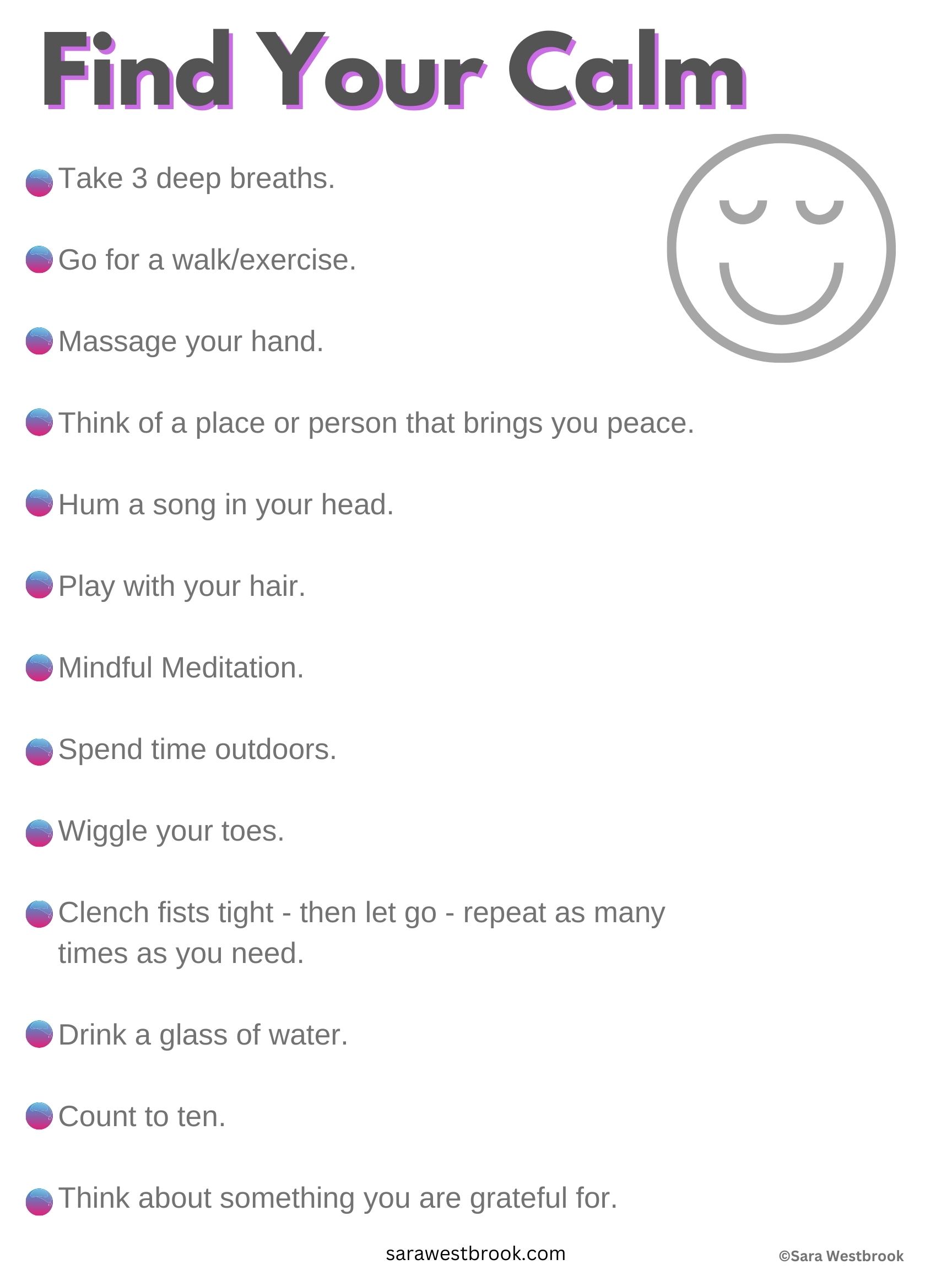
  • Practice moving forward with confidence, compassion, and clarity instead of getting stuck in the emotion (find your calm poster)

This is what I know: Each time a child pays attention to their feelings and responds calmly and clearly, they’re building skills that will help them handle the next challenge with more ease and confidence – a key part of kids emotional resilience in everyday life.

Until next time…

11 Dec 2025

Mindset Phrases for Kids That Work

We all want our kids to feel confident and capable.

Sometimes we tell them things like believe in yourself, try harder, or be more determined and they’re left thinking, OK… but how do I actually do that? That’s where mindset phrases for kids come in – simple, usable words that help strengthen their inner voice when they need it most.

Anytime – before school, during homework, in the car, or when emotions start to take over – have them pick one phrase to say:

  • I can do hard things.
  • I’ve got this.
  • I am determined.
  • I will find a way.
  • I am calm and focused.

Think of these as mindset mini-workouts. Quick, simple, powerful. Each time they say one, their inner voice grows stronger.

Make it playful – robot voice, superhero voice, opera singer voice or even a silly family chant. The more fun I make it, the more my son actually dives in and repeats the very mindset phrases for kids I want him to use.

This is what I know: You’re not just cheering them on – you’re giving them a mindset tool that helps them rise through any moment.

For more tips on resilience, mindset and everyday ‘life stuff’ follow me on Instagram

Until next time…

30 Oct 2025

Gratitude in the Unexpected

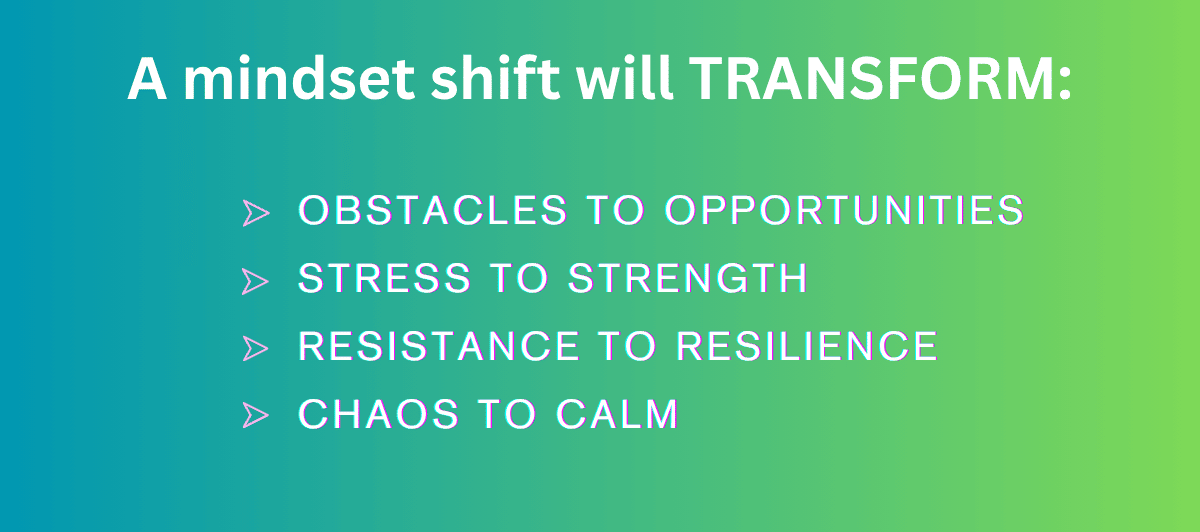
When you choose to only focus on what you expected to achieve or what you wanted to occur, a mindset shift for gratitude helps you notice the learning and opportunities that can come from life’s detours.

When I was travelling to BC, I expected that my holiday would be stress free – a time to relax and have fun.

Then the detour happened…my purse with all my ID was stolen. I was sad, angry, disappointed and overwhelmed.

Awhile later my mum suggested I write 3 things I could be grateful for from this disheartening incident.

I was shocked. What could I possibly appreciate?

I decided to give it a try.

I took pen to paper and wrote:

1.    The kindness and generosity of the people around me who wanted to replace the items in my purse.

2.    My brother-in-law (a police officer) immediately started to find ways to get me new identification so I could board the plane home.

3.    A fun shopping trip with my mum to replace my purse.

When I chose to focus on what I appreciated rather than what I expected, a mindset shift for gratitude made it easier to let go of the tough emotions I was experiencing, and I was able to bounce back much quicker than I normally would.

Next time your child is facing a challenging time or a tough emotion, ask them to write or tell you 3 things they are grateful for to help them bounce back to move forward.

This is what I know: A mindset shift for gratitude works – not only for kids but also adults!

Until next time…