0
3 Jun 2026

What drives choices? Emotions or Character?

Every parent wants their child – and themselves – to make choices they are proud of and understand what drives choices.

Most choices aren’t made with calm thinking. They’re made in emotions.

A child blurts something hurtful when they’re upset.
A parent snaps after a long, exhausting day.
A sibling argument escalates over something small.

Understanding what drives choices

Emotional choices are based on how you feel in the moment.

A child can say, “I’m frustrated,” and still slam a door.
A parent can say, “I’m overwhelmed,” and still raise their voice.

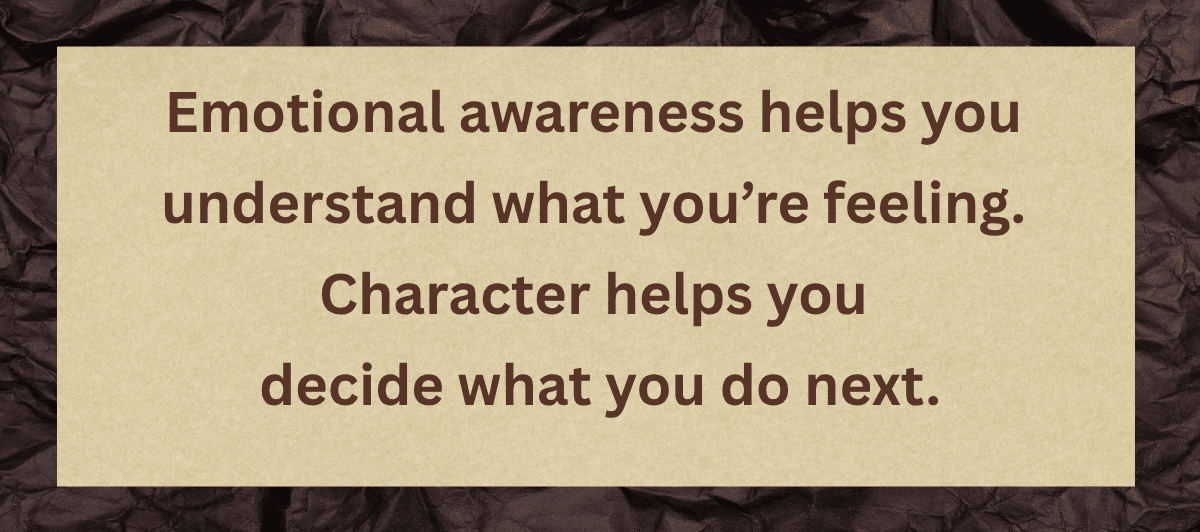
That’s because emotional awareness doesn’t always change what happens next.

That’s where character comes in.

Character helps you pause long enough to ask: Is this how I want to show up right now?

This is why I created the Choice Making Formula. It helps both kids and parents move from emotional reactions to character-based choices.

Character in everyday moments

For example, a child feels embarrassed after being corrected in front of others and wants to disappear or push back

Character in everyday moments

Emotion says: Get angry. Say something back. Shut down.
Character says: I don’t like how that felt, but I want to respond in a way I can feel good about later.

Or a parent comes home after a long exhausting day and is immediately met with noise and arguing.

Emotion says: Yell. Shut it down fast.
Character says: I’m overwhelmed, but I don’t want to speak from that place.

It creates awareness in the moment when reactions usually take over.

Character doesn’t erase big emotions. It gives them direction.

This is what I know: It’s not about getting rid of emotion. It’s about making a character-based choice in the middle of emotion, so your children learn to do the same.

Until next time…

4 Sep 2025

Why Kids Need Space after School?

It doesn’t matter if your child is usually a chatterbox or more reserved—sometimes, getting them to open up after school can be tough, at least for me. 😊

Your child arrives home, and you can’t wait to hear every detail. You ask, “How was your day?”

And you get… “Good.” (That’s my son’s go-to response)

Or maybe you get, “I don’t want to talk about it.”

Or nothing at all.                

Sound familiar?

School days are long. They require a lot of emotional energy: paying attention, learning new things, navigating friendships, following rules, and being ‘on’ from start to finish.

It’s not about shutting you out — it’s that kids need space to unwind before they can talk. Instead of pressing for details right away, try giving them a calm, welcoming space. Offer a snack, suggest a quiet activity, or simply let them settle in.

When kids feel they have permission to decompress, they’re more likely to open up on their own. Sometimes the conversation comes minutes later, sometimes at bedtime, or even the next day — and that’s completely normal.

I know for my son bedtime is when he opens up – that’s when I get information I thought would happen as soon as he walked in the door.

This is what I know: Respecting that kids need space helps them feel supported and more willing to share when they’re ready.

Until next time…

25 Sep 2024

Teaching Kids the Emotional Impact of Their Actions

My son was getting ready for school, but not at the pace he needed to in order to catch the bus. I started noticing a pattern – every time I reminded him to do something, he responded with, ‘I’ll do it. Just give me a minute.’

The minutes kept passing and nothing was getting done. He had tasks to complete to be ready on time, but they weren’t being done. I felt my irritation building, realizing that my frustration stemmed not only from his inaction, but also from his lack of awareness of the emotional impact of his actions.

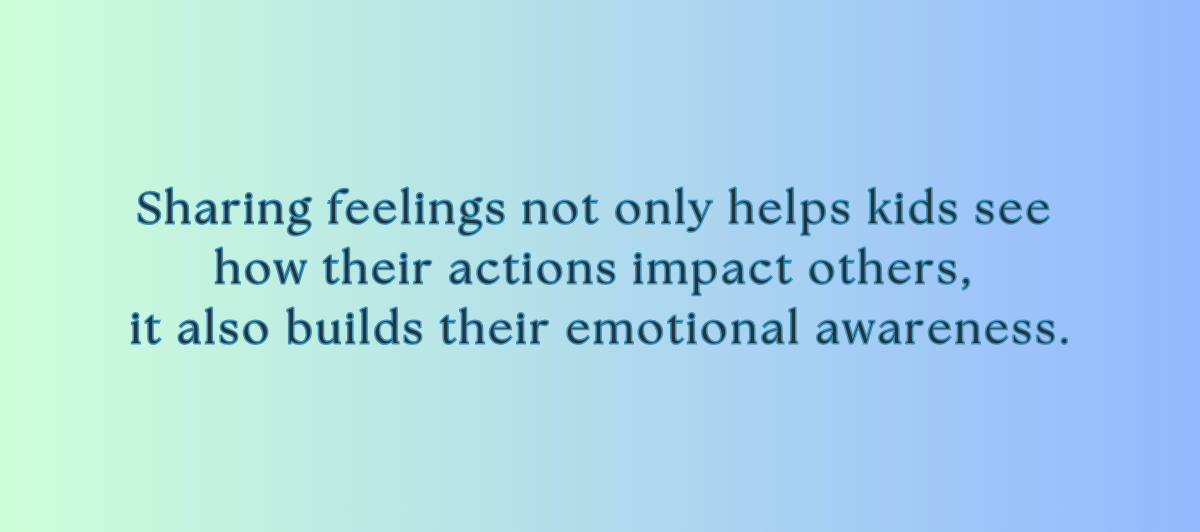
Finally, I looked at him and said, ‘I’m feeling really irritated. You keep asking for a minute but then you don’t actually get the task done .’ He gave me a surprised look and said,’ Mom, I didn’t know that you felt irritated.’

And I thought, ‘Seriously? You didn’t realize that me asking over and over again would be irritating?’

Lightbulb moment

He’s right. I’ve been experiencing emotions and understanding how people’s actions affect others’ emotional states for much longer than he has. It’s easy to assume that our kids should know how their actions (or lack of action) affect others, but in his words, ‘I didn’t know that. I’m still learning.’

And I realized—yes—he is still learning. While our kids might be more aware of their own emotions, understanding the emotional impact of actions on others is a very different challenge. It takes time, practice, and open communication.

This is what I know:

As frustrating as these moments can be, they are opportunities for growth – for both of us. It’s a reminder to be patient, not just with our kids but with ourselves, as we guide them through the complex world of emotions. Just as learning how to read or ride a bike takes practice and patience, so does learning how to interpret and respond to the emotions of others.

Until next time…