0
24 Jun 2026

The Benefits of Boredom for Kids

Summer break is here. Routines disappear, structure shifts, and for many families, technology becomes the easiest way to fill the day.

When it isn’t an option, that’s when you might hear those familiar words: “I’m bored.”

Without it, our instinct is often to make suggestions or figure out something for our kids to do. Truth be told I did suggest vacuuming 🙂

Sometimes the hardest part of our child’s boredom isn’t their discomfort. It’s our discomfort.

I realized recently that when my son lost his technology privileges for two weeks, his first response was, “What am I going to do now?”

If I’m being honest, his boredom was uncomfortable for me. It was distracting and annoying. It would have been much easier to solve the problem for him. Then I would have gotten some much-needed peace and quiet.

But I didn’t step in.

After a few days, something shifted.

He started finding things to do. He got creative. He even began playing with the younger kids on our street and teaching them how to play baseball. None of that would have happened if I had rushed in to solve his boredom.

That experience reminded me that boredom isn’t something we always need to solve.

If we can sit with our own discomfort long enough to step back, our children often discover they never needed us to fix it. They just needed space to figure it out themselves.

This is what I know: Sometimes the greatest gift we can give our kids isn’t another solution. It’s the chance to discover what they’re capable of.

Until next time…

28 May 2025

Kids: Talking Back or Speaking Up?

We say we want our kids to be resilient.
To have confidence.
To take a stand.

But what happens when they talk back, disagree or express frustration to us, our first reaction might be: “That’s disrespectful!”

What if it’s not talking back…what if it’s speaking up?

Since they’re still learning how to express themselves, their words won’t always come out the right way. They might speak louder or sharper than we’d like—not because they’re being disrespectful, but because they’re still figuring out how to speak in a way that gets heard.

If we want our kids to speak up with confidence and share what they feel, we can’t shut them down the moment it’s hard for us to hear.

What if we paused before reacting?
What if we asked ourselves: â€śAre they being rude… or are they trying to be real?”

Instead of seeing defiance, we see courage.
Instead of shutting it down, we see an opening—for connection, and maybe even conversation.

This is what I know: When we give kids space to speak up—without fear of being shut down—we’re helping them build the very skills we say we value: Confidence. Courage. Character.

Until next time…

20 Mar 2025

When Kids Want to Give Up

For two years, fear held me back from trying out for Canadian Idol. The third year, I finally said yes. I made it through two rounds, but when I stood in front of the celebrity judges and sang, they said, “You can’t sing! Do something else!”

I was embarrassed, devastated, and angry. I went home thinking, Maybe they’re right. Maybe I should give up. I started to doubt myself.

After a day of feeling sorry for myself, I made a choice: No. I love to sing. I’m going to work harder and improve.

Today, I’m a singer and speaker. If I had let their words define me, I would have quit on something I love.

But how many kids do give up on something they love because someone tells them they’re not good enough?

When I ask students, “How many of you have given up on something you love because of someone’s opinion?” hands shoot up—including the hands of educators.

Two ways to help kids overcome doubt:

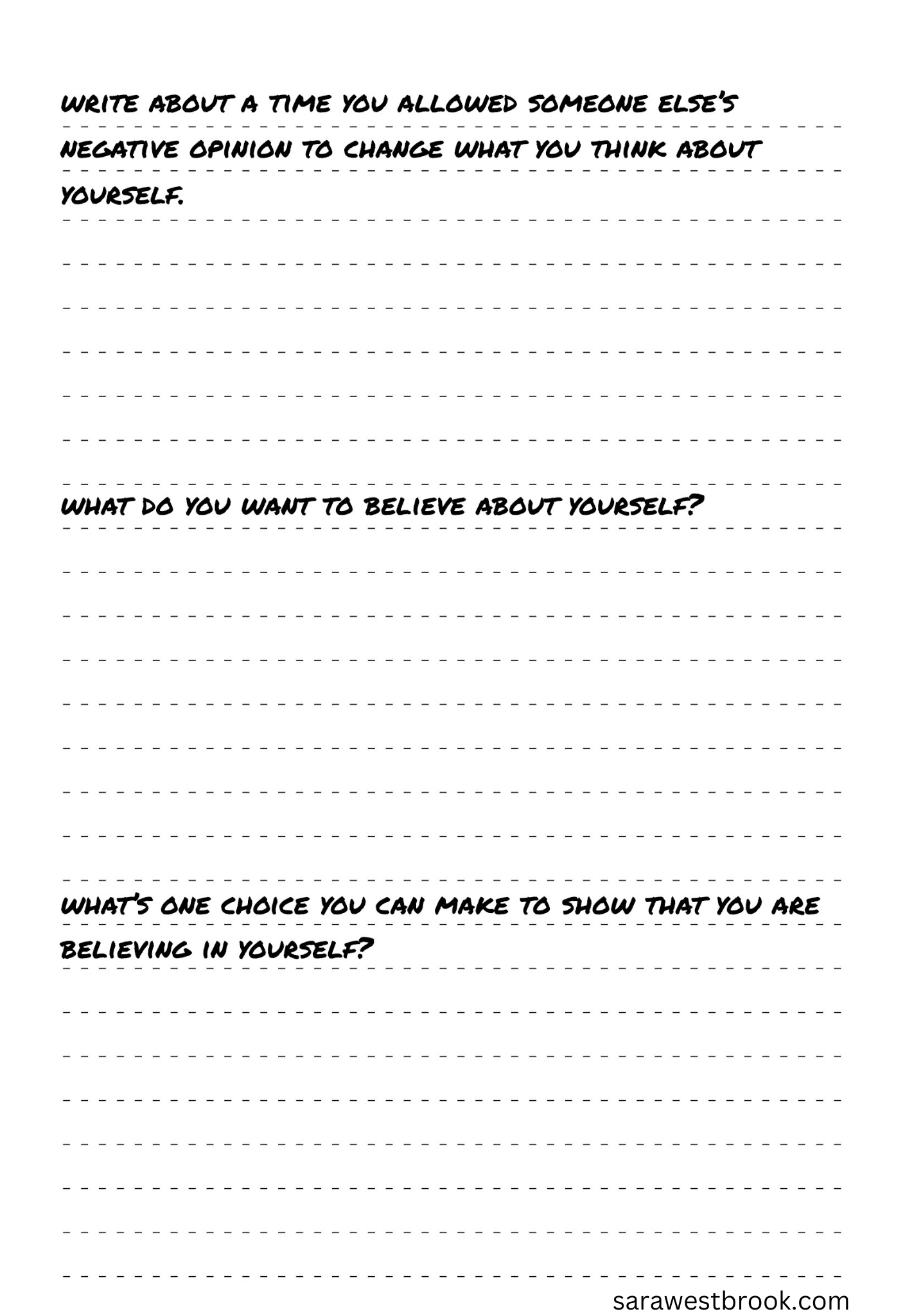
1. Support your child in completing this worksheet

2. Encourage them to ask, “Do I love this?” instead of “Am I good at this?”

Too often, kids measure their worth by others’ opinions. Help them focus on what brings them joy, and remind them that skills improve with effort.

This is what I know: Encouraging kids to keep going, even when they face criticism, helps them build resilience that lasts a lifetime. What matters most is believing in themselves!

Until next time…

5 Feb 2025

The Truth About Parenting: What Every Parent Needs to Hear

When I speak with parents, I notice a common thread—a strong desire to support their children and help them thrive. They’re not chasing perfection – parenting through imperfections is something every parent experiences. They just want reassurance that they’re on the right path. And when they discover new strategies, they’re eager to learn and grow alongside their kids.

Parenting comes with highs and lows, and some days, it can feel overwhelming, but here’s the truth—you’re doing better than you think.

In the midst of the busyness and uncertainty, here’s what matters:

Trust Yourself: There’s no perfect way to parent, but your love, effort, and presence matter more than any mistake you might make. Trust that you are enough.

Progress Over Perfection: Parenting isn’t about getting everything right; it’s about showing up, learning, and enjoying the journey. Celebrate the small wins—whether it’s a shared laugh, a moment of patience, or overcoming a challenge together. Parenting through imperfections allows room for these moments of connection.

Embrace the Imperfections: Parenting can be messy, and that’s okay. It’s the mistakes and moments of vulnerability that teach your child resilience and understanding. Embrace each challenge as an opportunity to grow and learn from the experience.

This is what I know:

✔️ Kids don’t need perfect parents.

✔️ You are not alone—every parent faces struggles.

✔️ Mistakes are part of learning, for both you and your child.

✔️ Love and consistency matter more than perfection.

You got this!

Until next time…