At 15, I entered the Rotary Music Festival again, determined to finally win gold after placing second two years in a row.
I had practiced for months. Memorized every note. Imagined the applause when I nailed my performance.
And then, in the second verse, I forgot the words.
Panic set in.
Embarrassed? Absolutely.
But I didn’t let that emotion take over.
My piano player quietly mouthed the lyrics.
I took a breath…gave that verse everything I had…and I won GOLD.
The judge later told me she was impressed that I didn’t give up.
That moment stayed with me – a reminder that mistakes don’t define you. Your response does.
You won’t always perform the way you want and that’s okay. You’re still worthy.
This is what I know: What matters most is what you choose to learn… and the choices you make next. And yes, being determined to win gold doesn’t mean you’ll never stumble – it’s how you respond that counts.
Until next time…
28 May 2025
Kids: Talking Back or Speaking Up?
We say we want our kids to be resilient. To have confidence. To take a stand.
But what happens when they talk back, disagree or express frustration to us, our first reaction might be: “That’s disrespectful!”
What if it’s not talking back…what if it’s speaking up?
Since they’re still learning how to express themselves, their words won’t always come out the right way. They might speak louder or sharper than we’d like—not because they’re being disrespectful, but because they’re still figuring out how to speak in a way that gets heard.
If we want our kids to speak up with confidence and share what they feel, we can’t shut them down the moment it’s hard for us to hear.
What if we paused before reacting? What if we asked ourselves: “Are they being rude… or are they trying to be real?”
Instead of seeing defiance, we see courage. Instead of shutting it down, we see an opening—for connection, and maybe even conversation.
This is what I know: When we give kids space to speak up—without fear of being shut down—we’re helping them build the very skills we say we value: Confidence. Courage. Character.
Until next time…
1 May 2025
Confidence vs Self Worth: Know the Difference
It’s easy to confuse confidence and self-worth—but they’re not the same. Understanding the difference makes it easier to stand strong in who you are. Confidence changes, self worth never.
Confidence is about your abilities—how you feel about what you can do, your skills, and how prepared you are. It shifts and grows as you face new experiences and challenges.
Self-worth? That’s something deeper. It’s about how you value yourself as a person, regardless of what you do or how you feel at any given moment.
There was a time when I believed my worth depended on my achievements, the praise I received, and how many likes I got on social media. I’ve learned that when you define your value by outcomes, you give your power to things outside your control.
Confidence changes, self worth never. It’s constant—no matter the situation
This what I know: You won’t always perform the way you want—and that’s okay. You’re still worthy.
You’ll make mistakes along the way—and that’s part of it. You’re still worthy.
Until next time…
6 Nov 2024
Guiding Children’s Choices
Just like a GPS needs a destination to guide us, our brain also works best when it focuses on a specific end result. Similarly, having a clear destination can guide children’s choices, helping them navigate challenges with confidence and purpose.
In life, a child’s ‘GPS destination’ needs to be rooted in their character. This gives them a clear sense of direction, helping them make choices that align with their character. Just like a GPS needs a destination to guide us, our brain also works best when it focuses on a specific end result.
When they don’t have a ‘character destination’ like kindness, honesty, responsibility and determination to help guide their choices, they can easily become sidetracked by their emotions and life’s challenging circumstances.
Three Tips to Help Your Child Set Their ‘Character Destination’
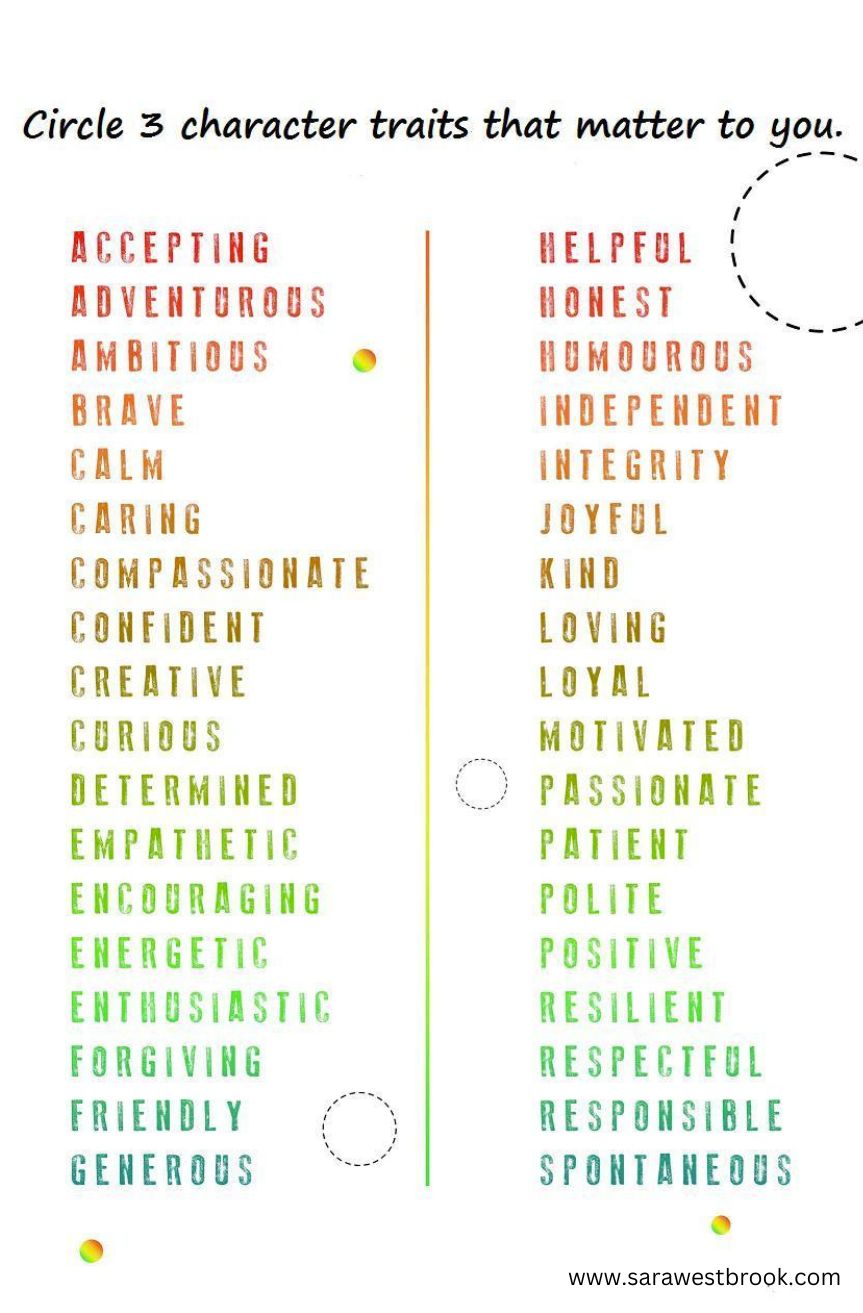
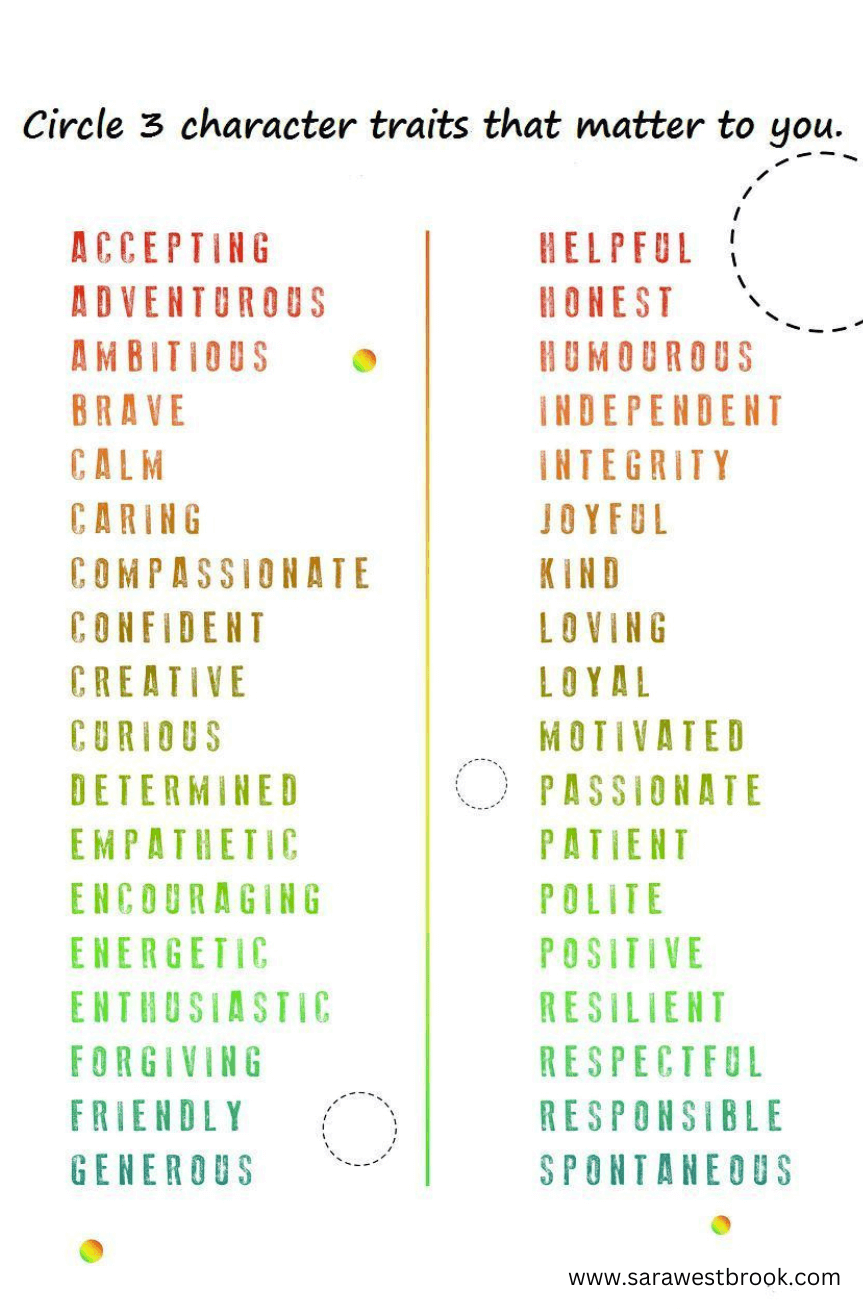
1. Discuss Character Traits: Help them figure out three-character traits they would like to be known for (use this worksheet for inspiration). Encourage them to think about how they might put each chosen trait into practice. This makes character traits real and achievable.
2. Compliment Character: When your child demonstrates their chosen character trait, be specific in your praise. For example, if they chose kindness and helped a struggling friend, say, “I noticed how kind you were when you helped your friend.” By recognizing their efforts, you reinforce how their character destination can guide children’s choices in positive and meaningful ways.
3. Encourage Reflection on Choices: At the end of the day, help your child reflect on how their choices aligned (or didn’t) with their ‘character destination’. Remind them that emotions can sometimes pull them off course. When that happens, reassure them that it’s okay to pause, reset and refocus on making choices based on their character.
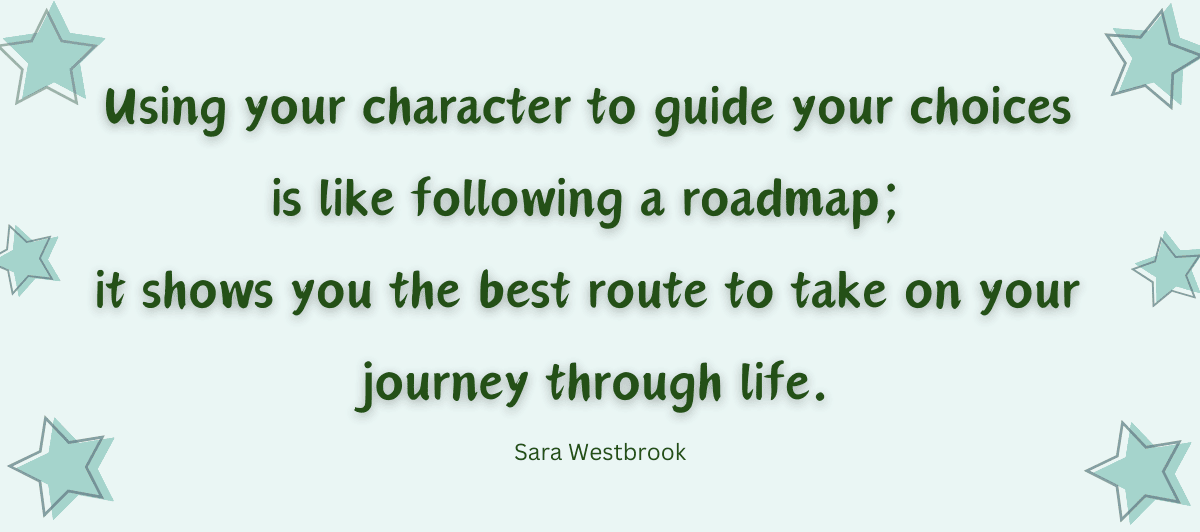
This is what I know: By helping your child create and follow a ‘character destination’, you’re giving them a ‘roadmap’ to navigate life’s ups and downs. This strategy not only builds resilience but also guides children’s choices ensuring they stay true to the character traits that matter most to them.
Until next time…
11 Jan 2024
Riding the Waves of Life with Determination
Every challenge you have faced and the choices you have chosen to make has created who you are today.
Picture yourself as the captain of a ship. Sometimes the water is calm and the choices are easy. Other times, the calm waters give way to crashing waves, intensifying the difficulty of your choices
Knowing your destination is crucial for guiding your ship in the right direction, and this holds true in life as well. Being clear about the person you want to be, the character traits you want to process, and the goals you want to achieve, gives clarity when navigating through tough challenges. You have a destination and even if the massive waves of your circumstances try to throw you off course, you persevere and continue moving towards your ultimate goal.
When you aren’t clear about what matters to you, it’s easy to allow circumstances and the emotions they trigger, dictate your actions and choices, which leads to a feeling of being out of control. Acting with intention instills confidence.
By respecting your goals, and acting in alignment with them, you will find yourself making small choices every day that help build the person you imagine.
Remember, it’s your choices, not your circumstances, that truly define you. Consider who you want to become, the traits you want to embody, and the goals you wish to fulfill. This now becomes the destination that guides you.
What I know is: All is possible when you choose to be determined, put in the effort and most importantly – BELIEVE in YOU ALWAYS – even when you are in the midst of a fierce storm!
Until next time…
3 May 2023
Does Your Child Compare Themselves to Others?
I recently heard this comment from a student, ‘I look around at others and they seem to have it all. Things would be easier if I could be them. I know I would be happier.’
This is what I know: It’s OK to admire others. The danger occurs when kids believe that they would be happier if they were someone else.
People’s lives often look better from the outside. They might post perfect pictures on social media or it may seem that things come easily to them or that they are happy all the time. Reminding our children that everyone has challenges and everyone experiences difficult emotions is essential to their overall well-being.
Instead of envying others, we must model and teach kids to choose to work on being the best person that they can be – to take pride in who they are and their uniqueness. Defining who they are and the character traits that are important to them helps build confidence, self-acceptance and resilience.
Here is an affirmation exercise to help your kids admire and love who they are:
Starting with ‘I am _____________and I am enough’, ask them to fill in the blank with the answer to this question: What do you want to believe about YOU? Some examples of what they could put in the blank are: confident, thoughtful, accepting, empathetic, kind.
Once completed, place it somewhere so that it is a visual reminder of what they want to believe about themselves.
Have your child repeat it daily. This will remind them that they are important, that they are somebody. It will create a feeling of happiness and pride the more they repeat and believe it.
Teaching children to celebrate and be proud of who they are compared to no one else, boosts their self-esteem, self-confidence and will ultimately make them feel capable of navigating day-to-day challenges and emotions.
Until next time…
19 Apr 2023
How does role-playing help kids deal with challenging circumstances?
Unexpected challenges will happen and it’s easy for those challenges to stop kids in their tracks. Although you can’t save children from every challenging situation, you can give a beneficial tool to help them better navigate the challenges and choices they will face.
The next time your child is struggling with how to handle a situation or not sure what choice to make, try role-playing. It gives your child’s brain a blueprint of what they can choose to do.
Role-playing also gives them:
a safe space to express themselves
a sense of control and calm as they work through their emotions
an opportunity to problem-solve as they act out the solutions to the situations.
A few days ago, my son Kai came home from school upset. There was something going on at school so he vented about the circumstance. Then, of course you know me, I asked what emotions it triggered. We talked about his emotions and then we role-played the circumstance.
I said, ‘Kai you be you & I will be the other person.’ I acted out my role in the circumstance he was facing at school and as he acted out what he was going to choose to do or say, I could see relief and less stress on his face. Then we reversed roles. We even started being silly by changing our voices. We both laughed. It was a way to add some humour to a serious situation.
The more fun you make role-playing, the more it will put your child at ease and the more they will enjoy doing it.
Until next time…
15 Feb 2023
Kids: Fitting In vs Being Their True Self
I received this question from a student who wanted to take a stand but was afraid if she did, she would no longer be fitting in.
Q: On my bus I sit with my friend who is very opinionated. There’s another girl on the bus that my friend really doesn’t like and makes rude comments to her. I feel bad about how my friend treats her. I often nod my head in agreement to my friend’s comments, not because I want to hurt the other girl, but because I want my friend to like me. I find myself trying to fit in with her. What should I do?
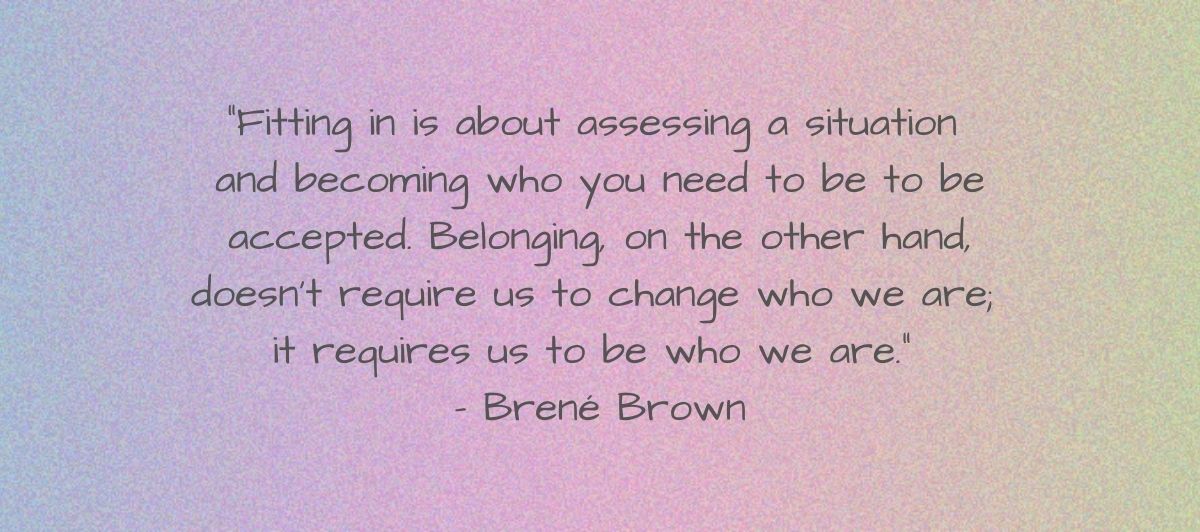
A: It’s so easy to get caught up with disrespectful and rude behaviour, especially when you are trying to ‘fit in’ and be liked.
When I look back on times in school that I didn’t speak up against disrespect I realize that:
I worried about what my friends would think of me if I said something.
I wanted to be liked and to fit in.
It seemed easier to go along with it.
Taking an action that you think may cause you to be left out, made fun of, disliked or be embarrassed by, is something we all try to avoid.
Here’s a question you to ask yourself: ‘Am I being true to myself by choosing not to say or do anything about my friend’s behaviour?’
I can always tell when I’m not being true to myself because I’ll hear a little nagging voice inside my head saying, ‘Why did you do that? Why didn’t you say something?’ causing me to feel guilt and regret for my actions.
#1 – End Result – to be someone who always tries to be liked by everyone no matter what.
#2 – End Result – to be a respectful person to myself and others and stay true to myself.
Picture two people in the same circumstance that you have shared with me. One person has End Result
#1 and the other has End Result #2. Do you think that they would make the same choice even though they are in the same circumstance? No, their choices would be very different!
#1’s choices would be to do whatever was needed to ‘fit in’ and be liked – even at the cost of hurting others and their own confidence.
#2’s choice would show that they are someone who is willing to take a stand for what’s right and what they believe even if it’s not the popular choice – even though it may feel scary.
#2’s confidence will grow while #1’s confidence will start to diminish.
Decide who you want to be – your character – your end result – then make choices from that place. If you are being kind, what choice would you make? If you are being brave, what choice would you make?
Write it out and put it somewhere you can see it. This will give you the focus, direction and confidence you will need so that you don’t change who you are in order to fit in. (video)
Until next time…
31 Jan 2023
How to Boost a Child’s Confidence
As parents, guardians and educators you want the children in your life to believe in themselves and their abilities no matter what!
So how do we arm children with the ability to bounce back from those negative, disrespectful judgments and opinions that challenge their belief in themselves?
Since we can’t save them from the all the tough moments they will face – the best use of our energy is to give them tools to boost their confidence.
Although they don’t have control over what other’s choose to say, the GOOD NEWS is… they have the final say in what they choose to believe about their body, their talent, their abilities, their life and their UNIQUENESS!
Below is an exercise I used growing up to help strengthen my confidence and self-worth. I use it with my 10 year-old son and thousands of students. It’s called a UPower Thought. UPower is your personal power to choose your actions, reactions and beliefs regardless of the circumstances.
Creating their own UPower Thought is a way to boost their confidence and to talk back to their self-defeating thoughts. They will hear their voice many more times than they will ever hear anyone else’s.
On a piece of paper have them write the hurtful or disrespectful word(s) they have heard.
Rip up that piece of paper while saying the words ‘I choose to let go.’
Then take a new piece of paper and write the words: ‘I choose to believe I am…’ (they will fill in the rest with what it is they actually want to believe about themselves regardless of the negative comment/judgment).
Some examples:
‘I choose to believe I am enough.’
‘I choose to believe I am amazing just the way I am.’
‘I choose to believe I am someone who makes a difference in the world.’
‘I choose to believe I am courageous and kind.’
Have them take a few minutes each day repeating their UPower Thought to themselves. The more kids hear their own voice saying encouraging words, the more their confidence and self-worth will shine!
When you encourage kids to practice creating their UPower Thought, they will start to see themselves differently. They will learn that what they to say to themselves is in their control and what they choose to tell themselves matters.
Until next time…
23 Nov 2022
Hurtful Words
“Stick and stones may break my bones, but words will never hurt me.”
Hurtful words do hurt!
They can have a devastating impact on a child’s mental and emotional well-being. They can leave them feeling rejected, embarrassed, discouraged, anxious and can affect their self-esteem, self-worth and identity.
After one of my presentations a young lady shared that she was being called fat and she didn’t know what to do. It happens way too often to both girls and boys!
I shared an activity that has helped me, my son and others bounce back from hurtful words.
The goal is to take the hurtful word – in this case F.A.T. – and change it to a meaning that strengthens confidence and resilience, which is beneficial for both mental and emotional health. When you encourage kids to practice this, they will start to see themselves differently.
They will learn that what they say to themselves is in their control and what they choose to tell themselves matters.
Step One
F.A.T. could mean
Fabulously. Awesome. Teen.
Fun. And. Talented.
Fit. And. Toned.
Step Two
Apply One of the Options Below Using the New Meaning to the hurtful word.
Option 1 – ‘You are right! I am a Fabulously Awesome Teen!’ (or the meaning they have created) Since the person delivering the hurtful words is not getting the reaction they expected, there is a good chance they will eventually get bored and stop.
Option 2 – If saying, ‘You are right! I am a Fabulously Awesome Teen!’ feels uncomfortable, then just repeat, ‘I am a Fabulously Awesome Teen!’ to yourself as you walk away.
For every word that hurts, take each letter and have it stand for a positive, empowering meaning. Then use option 1 or 2 with the new meaning.

)