0
26 Nov 2025

Naming ‘the elephant’ Builds Connection

Last week, I walked into my presentation with a bandage on my forehead. Before I started, I told the students what happened: I had tripped, hit my forehead, and ended up with a small cut.

Why did I start there? Because otherwise it would have been the elephant in the room and kids always notice ‘the elephant’. If we don’t explain, they fill in the gaps with their own guesses, worries, or assumptions.

Sharing what’s happening shows kids that it’s okay to notice, ask questions and share how they feel – the keys to building connection with kids in everyday interactions.

Ways to Connect
1. Name it: Tell them what’s happening when they notice something.
2. Keep it simple: A short, honest explanation is enough.
3. Invite conversation: Encourage questions and let them share their feelings.

When you do this, you are showing children that they can trust their observations and their feelings.

This is what I know: They will learn they are not alone, that feelings matter, and that mistakes are part of life – all essential for building connection with kids and helping them grow into compassionate, confident, and resilient people.

Until next time…

13 Sep 2023

How to Stay Consistent When Kids Push Your Limits

During a discussion with a parent, she shared that she frequently found herself giving in to her daughter after initially saying no. (I can certainly relate, having faced similar situations with my son.) It was clear that her daughter had learned a powerful lesson about testing boundaries. She learned that her tenacity and unwavering determination often led to successfully getting her own way, often leaving her parent feeling disrespected and even resentful. Giving in had created a pattern that her parent wanted to break.

Kids can experience intense emotions, especially when they don’t get their way, which can easily lead to tantrums, arguments, and power struggles. When this happens, it can be easy for us not to follow through with consistency, especially if we are feeling emotionally drained and want to avoid conflict.

It’s important to establish clear and consistent boundaries. Holding a boundary for your child can be incredibly challenging when you know they are going to be disappointed and push back. Trust me, I’m not always perfect at it myself.

Something that continues to help me is reminding myself that my son can feel upset and angry and that I can still hold my boundary. I repeat in my head, ‘His disappointment is not my guilt.’

Setting reasonable boundaries and maintaining them isn’t about suppressing a child’s desires; it’s about teaching them valuable life skills. It’s about helping them understand limits and that choices have consequences. It allows them to learn how to navigate disappointment and frustration. It’s a crucial part of their emotional growth and development.

This what I know: Staying consistent and helping a child understand the value of boundaries will have everlasting benefits in their relationships, careers, and overall well-being throughout their life.

Until next time…

sara westbrook signature
14 Sep 2022

Strengthen a Child’s Resilience

As kids get older they start to rely more on the relationships with their friends, and less on their parents.

This can be problematic if they believe their friends are the only people they need in their village. Without the benefit of life experiences, friends usually can’t give the support and advice a young person needs to responsibly navigate to adulthood.

Even though I had wonderful friends, they didn’t have the guidance I needed when I shared my sadness and confusion around my parent’s divorce, the lack of relationship with my dad after the divorce and the boy in my class who made fun of me most days.

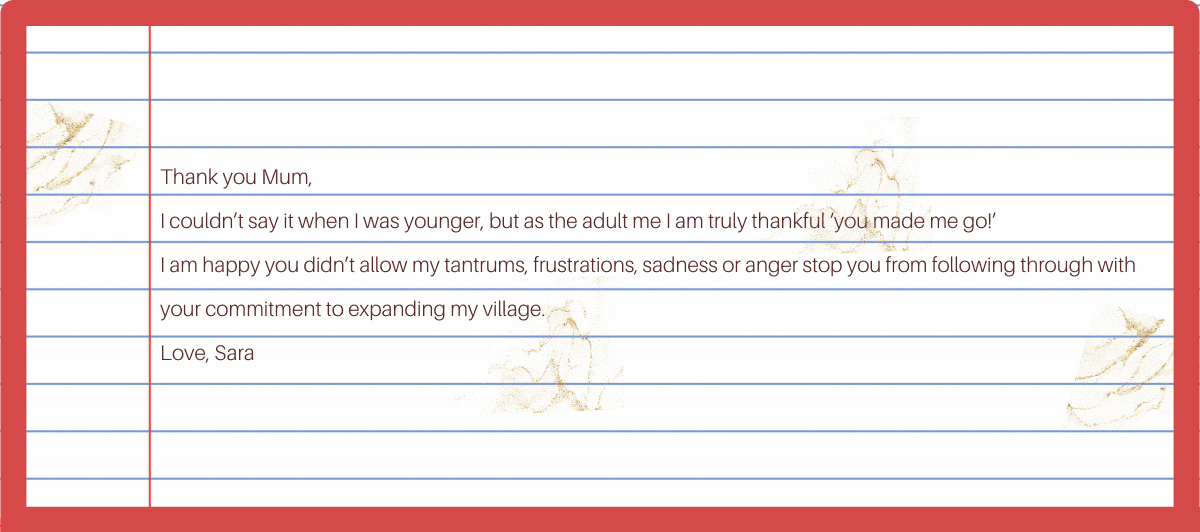
My mum could see I was struggling and recognized I needed more than she could give me. She realized she needed to expand my village. She started sending me to character development courses, support groups and leadership camps.

As a preteen and teen I wasn’t the least bit interested in going. Getting really angry telling her I didn’t want to go and telling her I didn’t like her, got me nowhere. My Mum would simply reply, ‘You don’t have a choice.’

How does expanding a child’s village help?

I couldn’t see any benefit in my mum’s decision at the time – all I could see was that her choices were taking away time from me hanging out with my friends. Now in reflection, I can clearly see that by expanding my village to include mentors, coaches, teachers, new experiences and wisdom taught me to be confident, responsible and resilient.

Teaching your child the importance of learning from different mentors and role models will not only enrich and expand “their village”, it will also help develop their mental, emotional and physical well-being

Your child will probably not thank you for expanding their village. However, one day they will look back as I did…

Until next time…

8 Feb 2022

Because I Felt Like It!

Ever wondered, ‘Why is my child/student acting this way? Why are they being rude, disrespectful or hurtful? That’s not like them.’

Ever asked, ‘Why did you do/say that?’

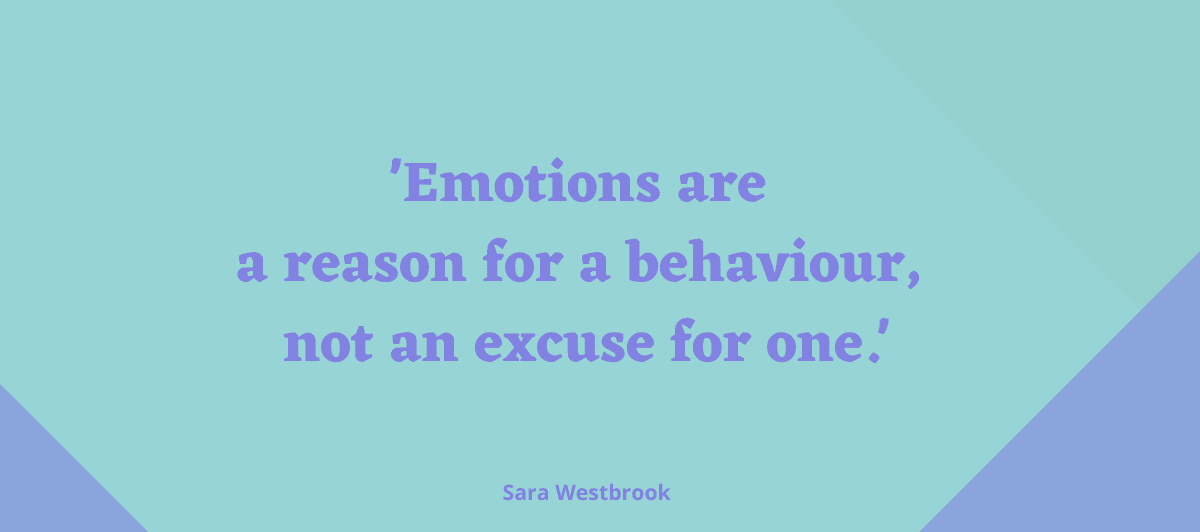
Here’s why: Emotions.

I’m sure you have heard this response to the above questions… ‘because I felt like it!’… and it’s probably true.

A circumstance happened that caused them to feel frustrated, worried, upset, angry or stressed. However, the circumstance wasn’t the only reason for the behaviour, the circumstance triggered an emotion and the child reacted out of that emotion causing a behaviour.

Since emotions are super easy to react out of, they can easily impact choices leading your child/student’s to behave in a way that is not their character.

The next time they have a behaviour that doesn’t reflect who you know they are, instead of asking ‘why did you do that?’

ASK: ‘What emotion were you feeling when you did or said that?’

Watch my video to learn more about my take on behaviour & emotions.

Until next time…